Why this part of Piemonte feels so different
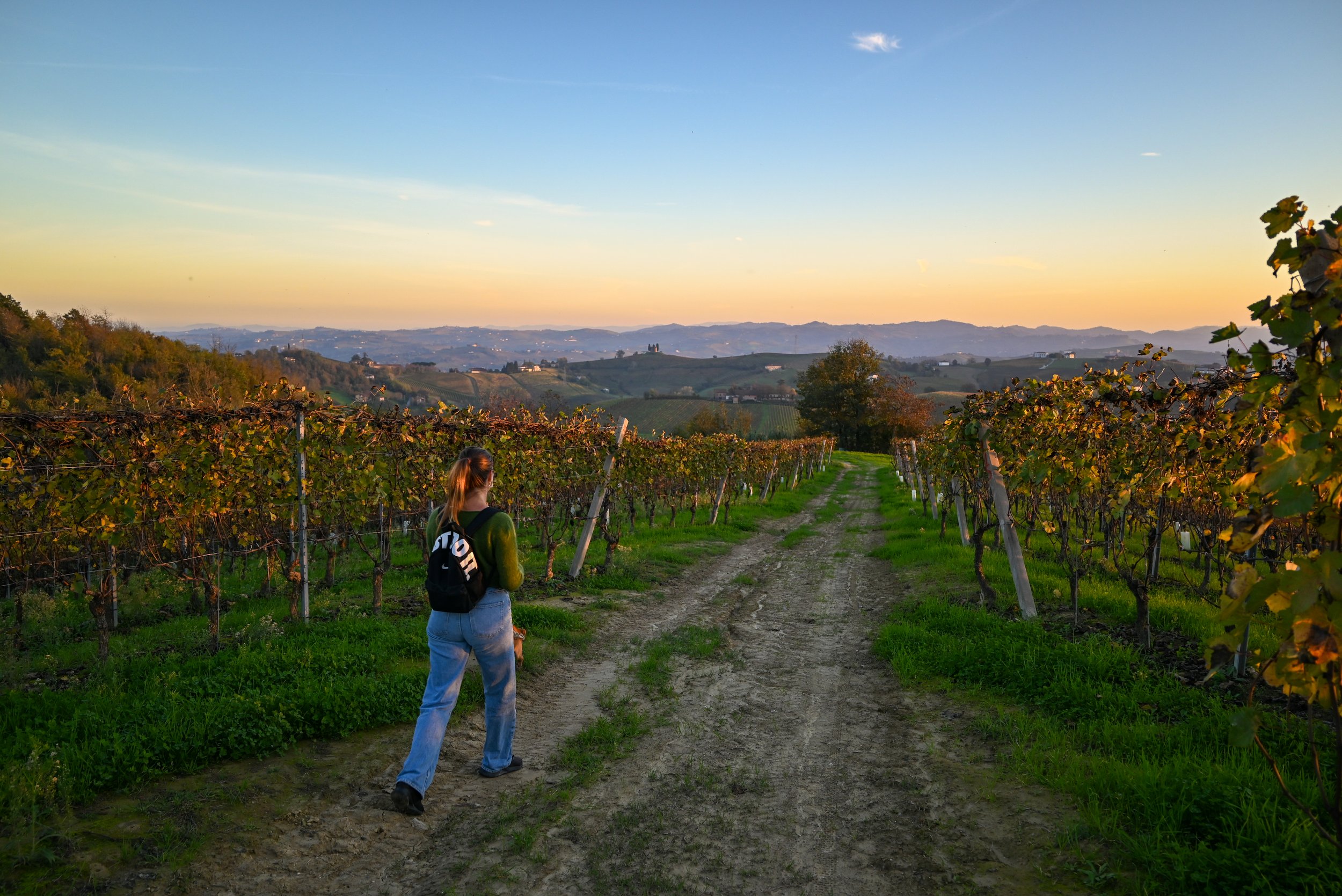
Ancient seas, remarkable wines, a landscape shaped by generations of farmers and a culture where good food is always worth talking about. Let us introduce you to the Piemonte we know and love.
Welcome to “Our” Part of Piemonte
There's something about this part of Italy that makes you want to share it with others.
Perhaps it's the landscape, with its endless rolling hills, vineyards, little villages and old farmhouses scattered across the countryside. Or the food, which always seems to be a perfectly good reason to spend another hour at the table. And then, of course, there's the wine.
But what makes Piemonte so interesting to us is also everything behind it.
The landscape has a interesting history, the wines are closely connected to the land they come from, and many of the traditions that make this region special are still very much part of everyday life.
We'd love to take you through some of it.
Starting with a quite surprising fact: millions of years ago, much of this landscape was covered by the sea.
From the Seabed to the Vineyards
Maybe it's difficult to imagine when you're standing among the vineyards, but these hills were once beneath the water.
And the evidence is still there.
During a walk through the Val Sarmassa nature reserve near Vinchio, you can see fossilised seashells embedded in the hillside. Actual shells, millions of years old, right there in the ground!
It makes you look at the landscape in a different way.
Over millions of years, geological movements and erosion transformed the ancient seabed into the hills and valleys we see today. The sediments left behind created a fascinating variety of soils, with different combinations of sand, clay, marl and limestone.
And that's where wine comes into the story.
Piemonte produces some of Italy's most celebrated wines, and the soil is an important part of what makes them distinctive. The same grape variety can produce remarkably different wines depending on where it grows.
Of course, soil is only one part of the equation. Altitude, sun exposure, climate and the knowledge of the winemaker matter just as much. But when you hear local producers talking about their vineyards, you'll soon discover how seriously they take the ground beneath their feet.
An ancient sea has left quite a legacy.
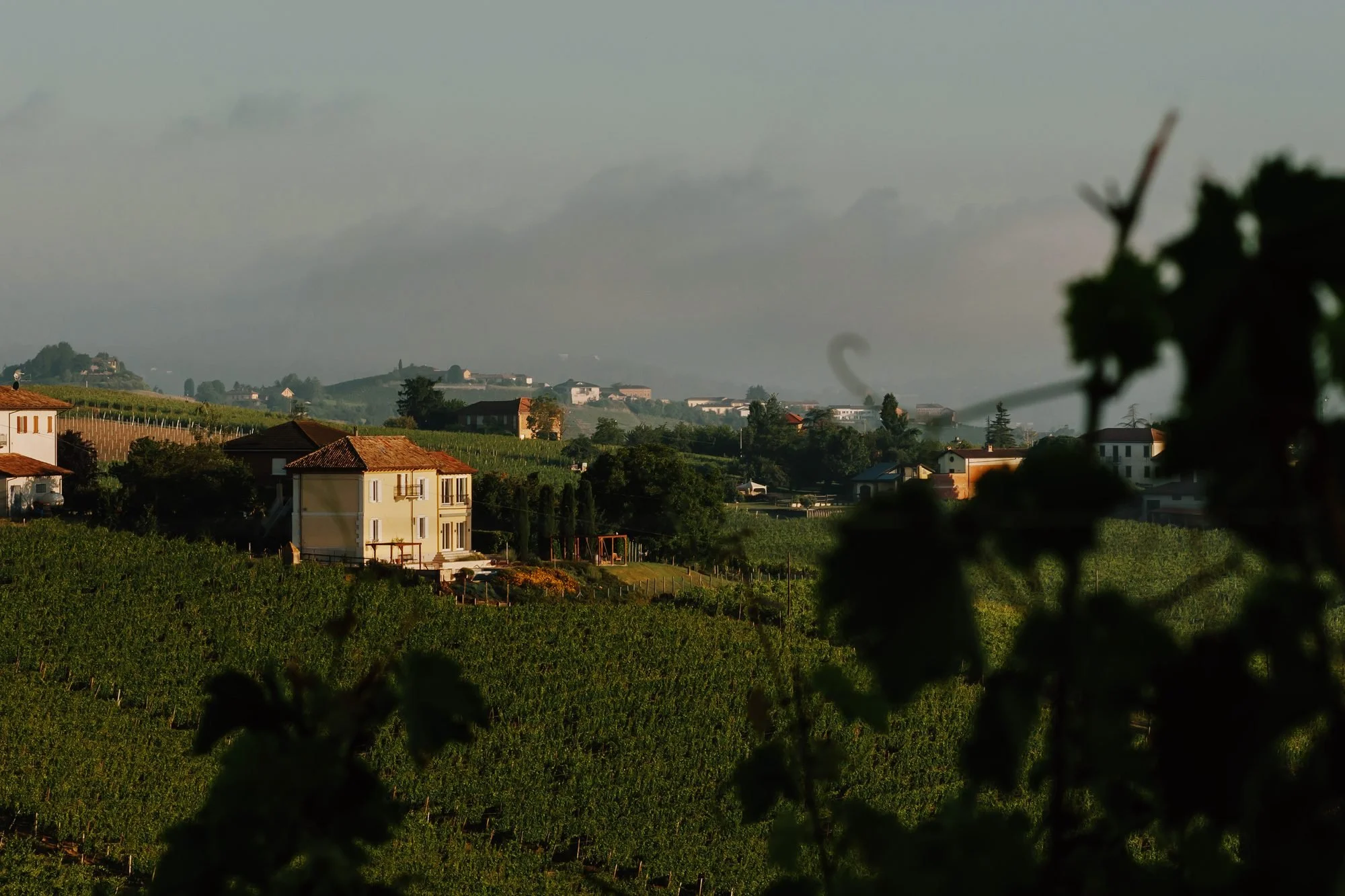
Vineyards around Villa Tinella. Click on the photo to jump to this Rallento stay. Picture by Alex Reyto.
A Landscape That Has Been Shaped by People
There's another thing about these hills that becomes more apparent the longer you spend here.
So much of the landscape we admire today has been created and maintained by generations of farmers.
The vineyards follow the contours of the hills in beautiful, almost geometric patterns. From a distance, they can look so perfectly arranged that it's easy to forget how much work goes into keeping them that way.
But living here, you notice that the work never really stops.
Even in the middle of winter, when the vines are bare and the countryside seems quiet, farmers are out pruning and preparing for the next season. In spring, the vines need training and care. Throughout summer, the work continues as the grapes develop, right up to the harvest in late summer and autumn.
And then, the cycle begins again.
It's not just the vineyards. Hazelnut groves, orchards, fields and woodland all contribute to the landscape, each with their own seasonal rhythm.
That relationship between people and the land is one of the reasons parts of this region received UNESCO World Heritage status in 2014.
The recognition isn't simply about beautiful scenery. It celebrates centuries of winegrowing knowledge and the way people have adapted the landscape, buildings and agricultural traditions to the land itself.
What's interesting is that UNESCO recognition doesn't cover all of Langhe, Roero and Monferrato. Since 2014, six specific areas have held World Heritage status, recognised for their centuries of winemaking history and the remarkable relationship between people and the landscape.
These include the vineyards of Barolo and Barbaresco, Grinzane Cavour Castle, the Barbera hills around Nizza Monferrato, the sparkling wine heritage of Canelli, and the historic underground wine cellars known as infernot in northern Monferrato.
Together, they tell an important part of Piemonte's story. But as the map shows, the UNESCO areas represent only a small part of this much larger and wonderfully varied landscape.
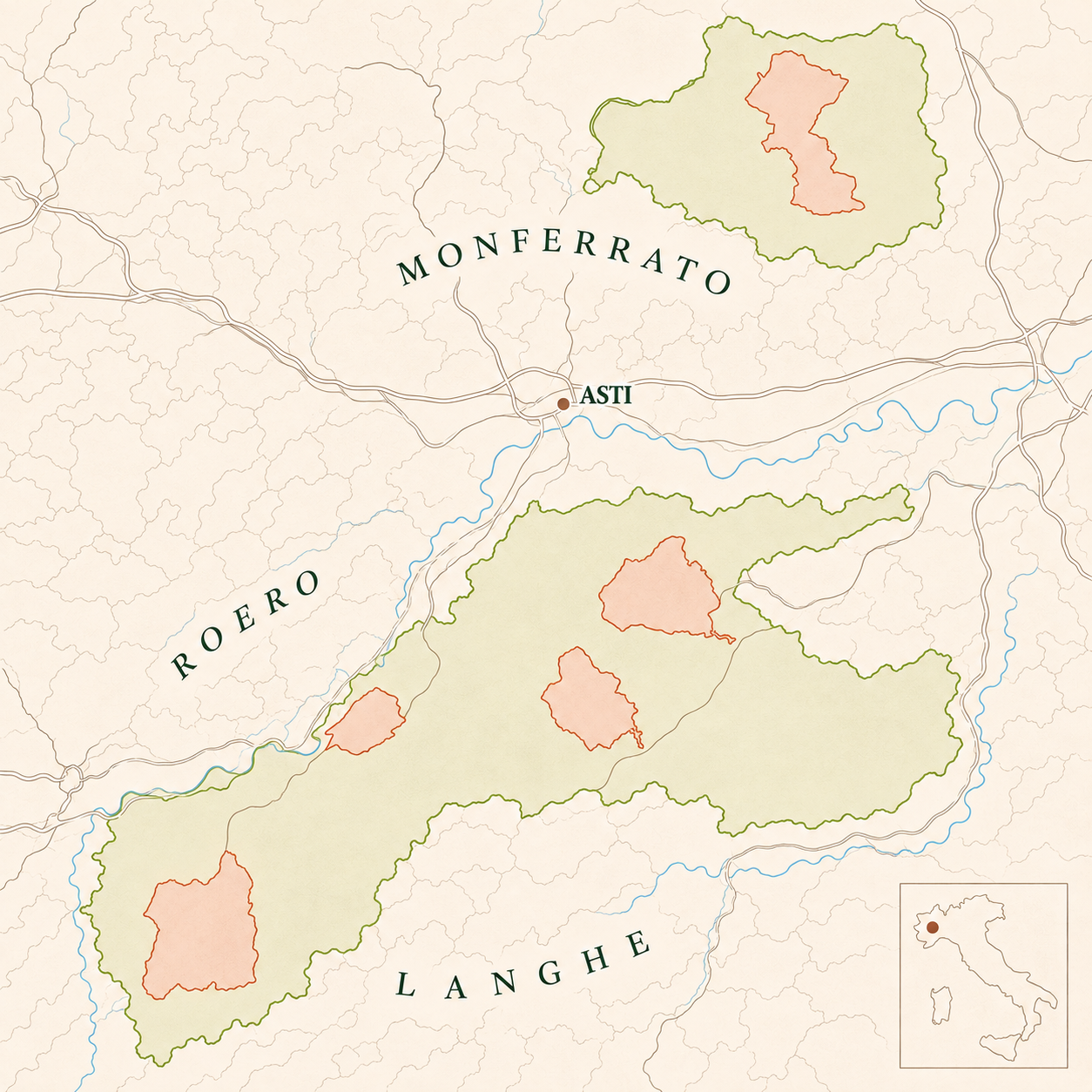
Schematic overview of the UNESCO World Heritage areas in Langhe, Roero and Monferrato. Click the image to view the official UNESCO maps.
A Region That Takes Food Very Seriously
If there's one subject guaranteed to start a conversation with an Italian around here, it's what to eat.
Ask someone where to find the best agnolotti, how their family prepares a particular dish or which wine they would serve with dinner, and there's a good chance you'll be talking for quite a while.
Everyone seems to have an opinion, and usually a passionate one.
Food is such a natural part of life here that it's almost impossible to separate it from the culture of the region (In December 2025, Italian cuisine itself was even recognised by UNESCO as Intangible Cultural Heritage!!). Markets follow the seasons, family recipes are taken seriously and many of the restaurants we love still serve dishes that have been prepared in much the same way for generations.
So perhaps it isn't surprising that the Slow Food movement has its roots in Piemonte.
Its story began in 1986, when the arrival of a McDonald's near the Spanish Steps in Rome sparked protests against the growing influence of fast food and the disappearance of traditional food culture.
One of the people behind the movement was Carlo Petrini, from Bra, a town right here in Piemonte.
In 1989, Slow Food became an international movement, promoting food that is good, clean and fair, and encouraging people to care about where their food comes from and the people who produce it.
A movement born partly in opposition to McDonald's, with its roots in a region where a discussion about lunch can easily become the most important conversation of the day.
We rather like that.
And once you've spent some time here, it makes perfect sense.
Good food doesn't necessarily mean fine dining. It might be a simple plate of tajarin with butter and sage, handmade agnolotti, a local cheese or a few seasonal vegetables from the market.
What matters is the quality of the ingredients, the people who produce them and the pleasure of sharing them.
Add a bottle of local wine and there's rarely any reason to hurry.
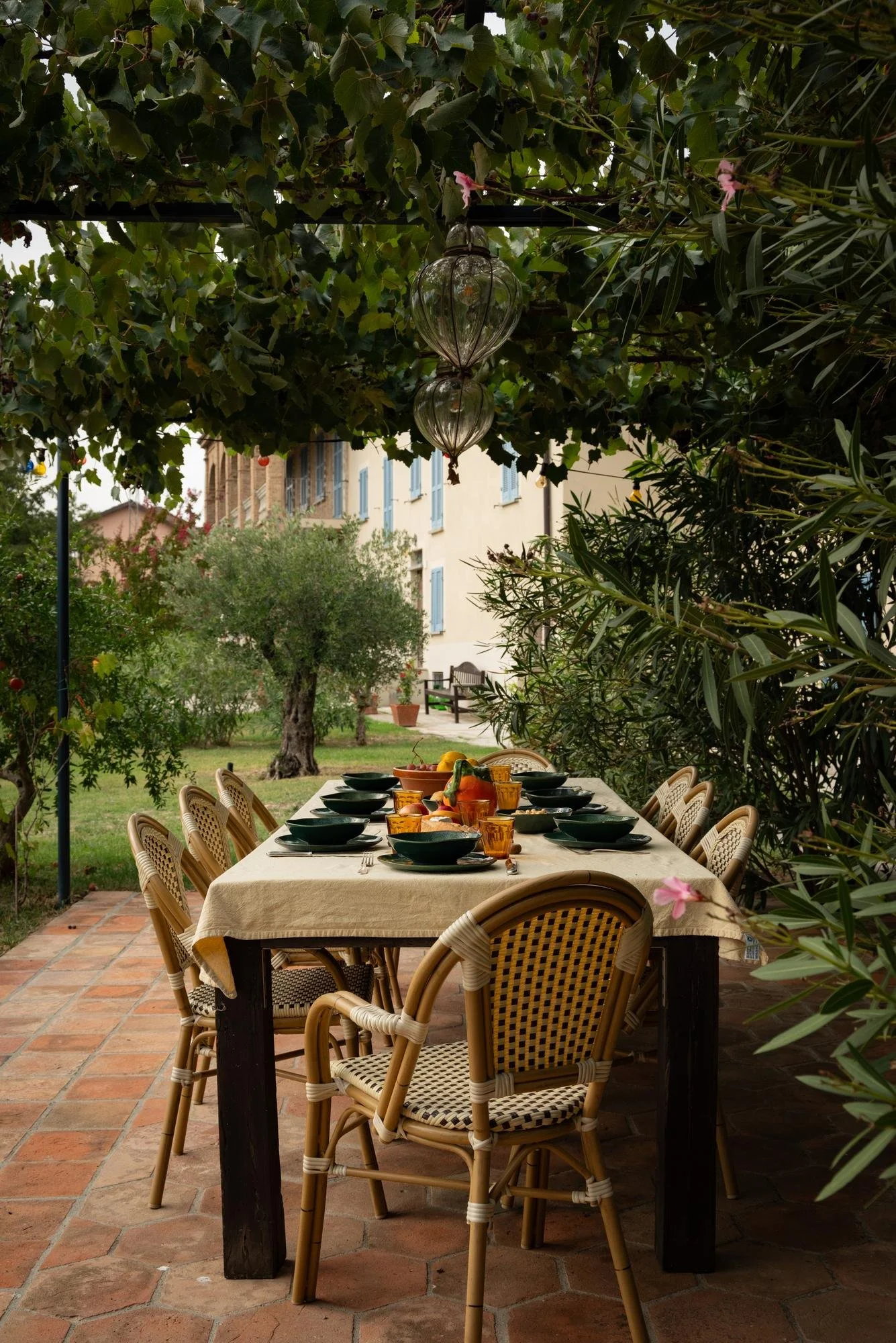
Long table at Casa Bansella in Agliano Terme, the perfect place to enjoy a slow lunch (pranzo). Click on the photo to jump to this Rallento stay.
Getting to Know Langhe, Roero and Monferrato
By now, you might be wondering where exactly all of this takes place.
Piemonte is a large region in northwestern Italy, bordering France and Switzerland, with the Alps to the north and west and a broad variety of landscapes.
The area we're talking about lies in the southern part of Piemonte, mainly across the provinces of Cuneo, Asti and Alessandria.
Here, three names come up again and again: Langhe, Roero and Monferrato.
They're often mentioned together, especially when talking about wine, but each has its own character. And even within these areas, the scenery, traditions and atmosphere can change quite considerably from one valley to another.
Langhe: Famous Vineyards and Quiet, Wooded Hills
The Langhe is probably the best known of the three, especially among wine lovers.
Around Barolo and Barbaresco, the hills are covered in carefully cultivated vineyards, with villages such as La Morra, Serralunga d'Alba and Neive offering some of the area's most recognisable views.
This is where two of Italy's most famous wines, Barolo and Barbaresco, are produced. Both are made from the Nebbiolo grape, yet each has its own character, influenced by the particular growing area and winemaking traditions.
It's a beautiful part of Piemonte to explore, especially if you're interested in visiting historic wineries and discovering the different expressions of Nebbiolo.
But the Langhe is much more than Barolo and Barbaresco.
Travel further south and the landscape begins to change. The hills become higher, woodland more prominent and the villages smaller.
In Alta Langa, forests, hazelnut groves, meadows and vineyards share the countryside. The area is also known for its traditional method sparkling wines, made under the Alta Langa DOCG designation.
Then there's the Langa Astigiana, around villages such as Bubbio, Cessole, Monastero Bormida and Roccaverano.
This is a side of the Langhe that surprises many visitors.
The landscape is noticeably more wooded, with quiet valleys, winding roads and villages that feel quite removed from the well known wine routes around Barolo.
It's a good reminder that two places can belong to the same geographical region and still feel completely different.
Wines to discover: Barolo, Barbaresco, Langhe Nebbiolo, Dolcetto and Alta Langa sparkling wine.
Places worth knowing: Barolo, La Morra, Serralunga d'Alba, Neive, Barbaresco, Dogliani, Bubbio, Monastero Bormida and Roccaverano.
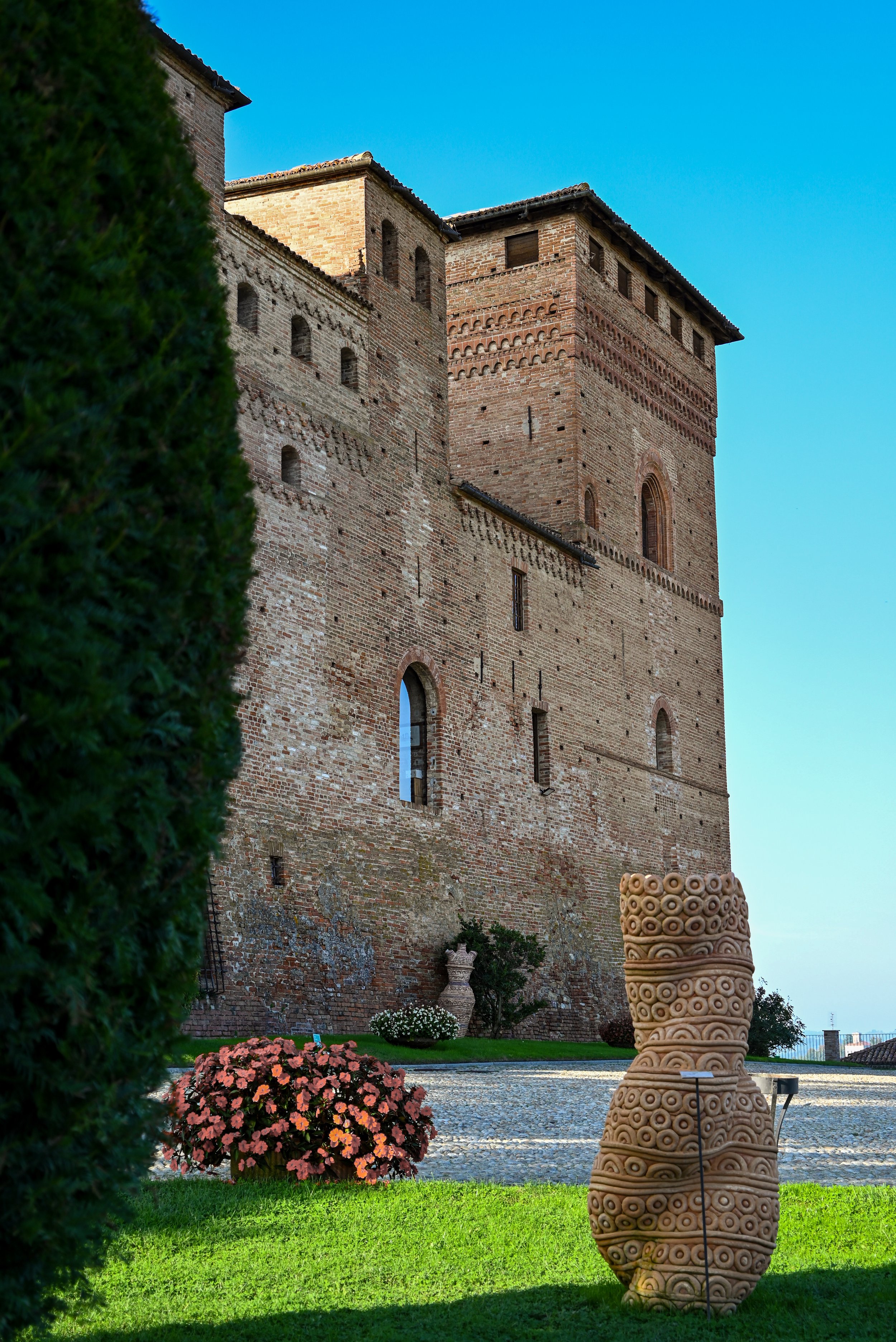
Grinzane Cavour
Monferrato: Open Landscapes, Barbera and Everyday Piemonte
Monferrato is the area we know most intimately, and one that still surprises us with its variety.
Stretching across large parts of the provinces of Asti and Alessandria, it is a landscape of rolling hills, vineyards, farmland, woodland and historic villages.
Around Nizza Monferrato, Agliano Terme, Vinchio and Canelli, vineyards cover many of the slopes, but there is plenty of agricultural life beyond winegrowing too.
Compared with the famous Barolo area, much of Monferrato feels less travelled. There are certainly well known wineries and beautiful historic towns, but you'll also find villages where tourism plays a relatively small part in daily life.
The vineyards are often interspersed with fields, orchards and farmhouses, and the views can stretch across one rolling hillside after another.
This is Barbera country.
Barbera is one of Piemonte's most important grape varieties, and around Nizza Monferrato it produces some of its most recognised wines, including (upcoming) Nizza DOCG.
The wider Monferrato area is also associated with Barbera d'Asti, Grignolino, Ruchè and, around Canelli, Moscato d'Asti and Asti Spumante.
But Monferrato isn't one single landscape either.
The hills of Monferrato Astigiano differ from those farther north and east in Monferrato Casalese, where you'll find other wine traditions, historic villages and the remarkable underground wine cellars known as infernot.
What we especially appreciate about Monferrato is the way beautiful landscapes and everyday rural life exist side by side.
You can spend the morning exploring a historic village, stop for lunch at a family run trattoria and find yourself driving past farmers working in the vineyards on your way home.
Wines to discover: Nizza DOCG, Barbera d'Asti, Grignolino, Ruchè di Castagnole Monferrato, Moscato d'Asti and Asti Spumante.
Places worth knowing: Nizza Monferrato, Agliano Terme, Vinchio, Canelli, Costigliole d'Asti, Castagnole delle Lanze, Vignale Monferrato and Cella Monte.
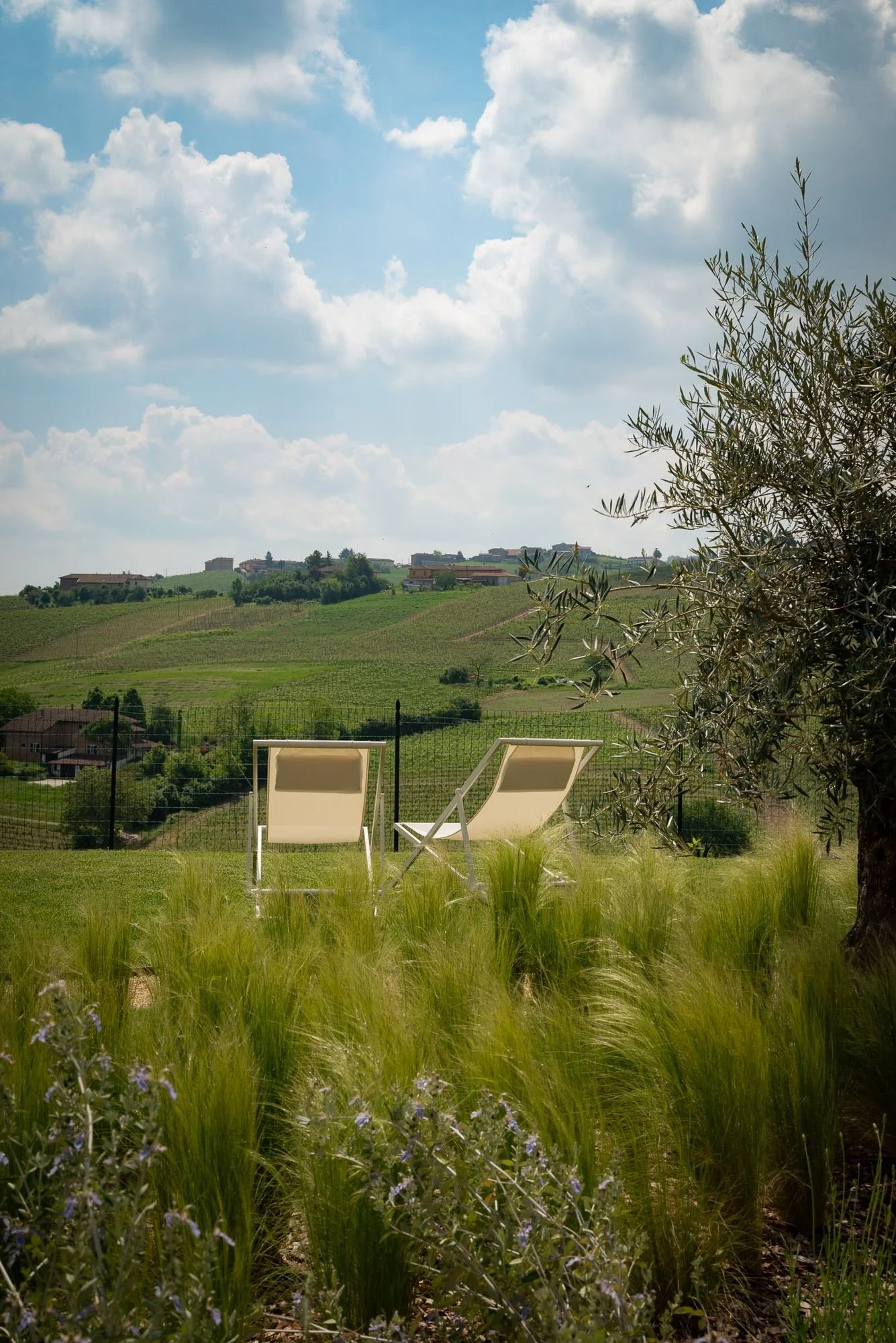
Garden at Casa Balau, the perfect spot to enjoy the view on the rolling hills of Monferrato/Langhe. Click on the photo to jump to this Rallento stay.
Roero: Sandy Hills, Orchards and Elegant Wines
Cross the Tanaro River north of Alba and you'll find yourself in Roero.
Although it's close to the Langhe, the landscape has its own distinctive character.
Roero is particularly known for its sandy soils and the Rocche del Roero, dramatic formations created by erosion over thousands of years. Vineyards sit alongside woodland, fruit orchards and fields, giving the countryside a varied, sometimes unexpectedly rugged appearance.
The sandy soils, also play an important part in the region's wines.
Roero is especially known for Arneis, a white grape that produces the area's celebrated Roero Arneis wines. Nebbiolo is grown here too, resulting in Roero DOCG reds that are particularly interesting to compare with those from the Langhe.
Around Canale, Montà and Vezza d'Alba, you'll find vineyards, walking trails and smaller villages that make this a lovely area to explore at a slower pace.
And for anyone interested in geology, the Rocche are another reminder of just how much this landscape has changed over time.
Wines to discover: Roero Arneis DOCG and Roero DOCG red.
Places worth knowing: Canale, Guarene, Govone, Montà, Vezza d'Alba and Santo Stefano Roero.
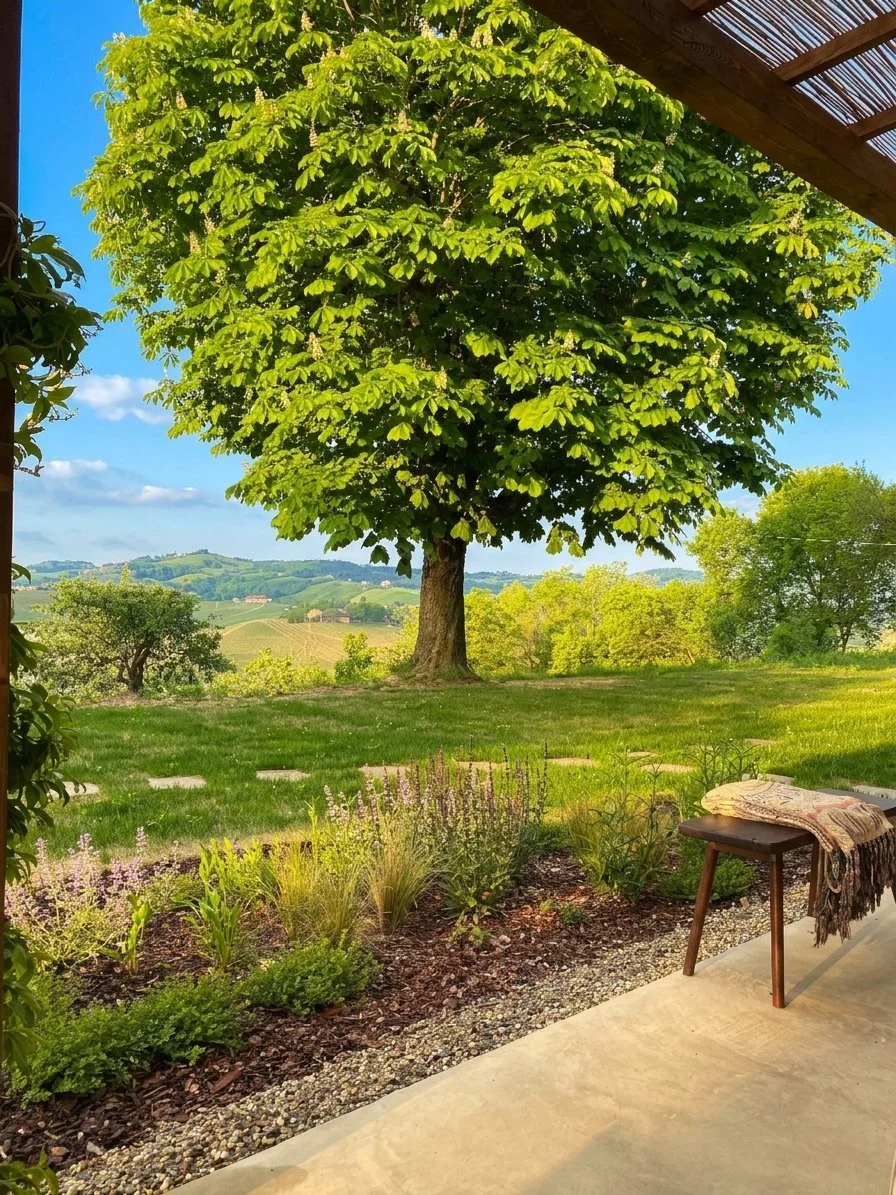
Enjoy the views around Nizza Monferrato from the garden at Cascina Sernella and explore the region. Click on the photo to jump to this Rallento stay.
Which Part of Piemonte Should You Explore?
The lovely thing about these three areas is that you don't necessarily have to choose just one.
The distances are relatively short, and a drive of half an hour can take you through remarkably different landscapes. You might spend one day visiting the famous wine villages of the Langhe, another exploring the sandy hills of Roero, and the next discovering the quieter roads and traditional villages of Monferrato.
But there's no need to see it all at once. Life moves at a gentler pace here, and we'd encourage you to do the same. Take your time exploring one area, rather than rushing from one highlight to the next.
And why not leave the car behind for a day? Rent a Vespa, explore the countryside by bike or join a guided cycling tour. The smaller roads wind between vineyards, old farmhouses and little villages, often with wonderful views around the next corner.
Stop for coffee somewhere you hadn't planned to visit. Ask a local where they like to eat. Take the time to listen to a winemaker explain what's in your glass. Or perhaps go for a walk and discover a few seashells in the hillside.
These are often the moments that stay with you long after your visit.
And you don't have to arrange it all yourself. Through our network of trusted local partners, we can help organise Vespa rentals, cycling tours, winery visits and other experiences that let you discover Piemonte in your own way.
Explore our experiences page to see how we can help you make the most of your time here.
This is exactly the part of Piemonte we're happy to share with you through our Rallento Collection.
Discover more local stories, places and traditions in The Rallento Guide, or explore our personally selected collection of homes in Piemonte to stay.